September 10, 2025
 Journaling Techniques for Mental Clarityby admin / December 10, 2025
Live Better, Live Smart
The use of lab test reports in healthcare has become one of the most effective methods, however, they still remain a mystery for many. It doesn’t matter if it is a regular visit to the doctor, a screening test for prevention or a doctor’s advice, gaining the knowledge about laboratory test reports will empower you to manage your health and make educated choices.
This guide breaks down every major test in simple and no medical degree required. Just clear explanations that help you decode what’s happening inside your body.
Every value in your report tells a story. When you learn to interpret these numbers:
People who understand lab test reports often prevent issues that others catch too late.
Every lab report—whether from a hospital, clinic or diagnostic center—contains similar components.
Age, gender and medical conditions are essential because they affect reference ranges.
Values appear in mg/dL, g/dL, IU/L, etc.
This is the “normal” range for healthy individuals.
If your result is outside the reference range, it may appear in bold, red or with an H or L flag.
Understanding these sections makes it easier to interpret what follows.
Reference ranges are not universal—they are based on:
A figure that is just a little bit higher or lower than the normal range is not an indication of a disease. Nevertheless, the hydration status of a person, his or her stress levels, sleep pattern and even the time of day may still affect the results.
When one is looking into laboratory test reports, it is advisable to think firstly of patterns instead of single numbers.
Let’s simplify the tests most people receive.
CBC is a window into your blood health. It includes:
White Blood Cells (WBC)
Red Blood Cells (RBC)
Low RBC signals anemia or nutrient deficiencies.
Hemoglobin (Hb)
Platelets
Essential for clotting
A CBC is one of the easiest tests to understand once you know what each component means.
These tests show how key organs are performing.
Kidney Function Tests
Understanding kidney markers helps you identify early kidney stress—often before symptoms appear.
Liver Function Tests (LFT)
The liver is an extremely tough organ and it is capable of regenerating itself, therefore it is actually the trend over time that matters rather than just one single abnormal value.
Electrolytes & Minerals
Electrolytes are one of the easiest sections to understand in lab test reports because deviations directly connect to symptoms like dizziness, weakness or dehydration.
Thyroid hormones regulate energy, metabolism and mood.
Knowing the markers of the thyroid can help to understand the symptoms of tiredness, changes in weight and mood that often confuse.
Hormones govern reproduction, metabolism, the body’s reaction to stress and a person’s sexual health.
Female Hormones
Male Hormones
While attempting to interpret the laboratory evaluation reports, hormone profiles are usually the ones that give insight into the symptoms which seem to be unrelated—sleep problems, emotional states, or lack of vitality.
These tests are necessary for any person who experiences changes in body weight, is tired without reason, or has diabetes in the family.
These are used by doctors to see whether there is a hidden infection or an inflammation that is still going on.
To truly understand lab test reports, follow this sequence:
Is the number slightly or significantly outside the window?
Different labs use different unit systems.
Compare this test to previous reports.
Lab values + symptoms = real clarity.
One abnormal number rarely means disease.
Seek medical advice if you see:
Never disregard severe abnormalities.
Yearly tests suffice for a majority of healthy adults while those with chronic conditions have to be checked more often.
Not always. Many factors can cause temporary changes.
Equipment, population samples and methods differ.
You can understand them, but diagnosis should always involve a professional.
Absolutely—hydration changes kidney markers, electrolytes and hemoglobin.
Learn the role of each test, compare values to ranges and evaluate trends over time.
One of the most powerful things that you can do for your health is learning to read lab test reports accurately. The figures presented in the reports are not only medical data—they are your body’s signals. If you interpret these figures correctly, you should be capable of identifying problems very early, preventing the progression of additional health conditions and therefore, being able to make healthier lifestyle choices.
The understanding of your medical tests is like a light that illuminates your health making it clear, simple and manageable.










Ever picked up a pencil just to doodle away the day’s chaos? Drawing isn’t kid stuff, it’s a game changer loaded with benefits of drawing that sharpen your brain, ignite creativity and deliver that sweet mental reset we all crave.
Picture this: sketching an object locks it into your mind way better than scribbling notes. That’s because drawing hits visual, motor and thinking circuits all at once, making memories stick like glue.
Stick with it, and you build brainpower in spots handling coordination and space smarts. It’s your secret weapon against age related fog, ideal for students grinding exams or pros juggling big ideas.
Drawing flips the switch on imagination, training you to spot possibilities everywhere. Suddenly, simple colorful drawing ideas like vibrant swirls or sunset scenes flow effortlessly.
No art degree needed, these sessions spark breakthroughs in writing, work brainstorming, or daily problem solving. It’s pure creative fuel.
Feeling swamped? The benefits of drawing for mental health kick in fast. Zoning in on lines and shades pulls you to the present, slashing stress hormones.
A quick 20 minute session beats doom scrolling, easing anxiety and lifting spirits. It’s like free therapy, unpacking emotions silently and feeling lighter.
Notifications pinging everywhere? Drawing demands your full attention, forging unbreakable concentration as a star benefit of drawing. Even meeting doodles increase recall by 29%.
Hit that flow state, total immersion with zero effort and watch distractions vanish. It is powerful for ADHD or productivity slumps. Mandalas are your fast track.
Doodle your feelings to boost self awareness and empathy, a subtle health benefit of drawing. Lines help you master moods and build deeper bonds.
All levels are welcome. The act itself helps you navigate life’s rollercoaster more smoothly.
Physically, drawing is powerful. Precise strokes tune coordination and dexterity. From kids’ scribbles to seniors’ steady hands, it keeps movements sharp.
Surgeons, musicians and gamers all credit art for their edge.
Finish a sketch and dopamine surges while confidence rises. This is one of the most addictive benefits of drawing. Turn “I suck at this” into “Wow, I created that!”
Quick, visible progress keeps you motivated for life.
Overwhelmed? Dive into creation for a clutter free escape. This healthy mental break supports recovery from tougher days.
Unlock benefits of drawing now:
Pure fun with instant rewards.
Drawing is cheap, portable and flexible. You can do it for five minutes or for hours. The stress relief and joy make it addictive in the best way for real life.
Flow state bliss, emotional release and primal mark making are deeply satisfying. Our brains crave visual expression for connection and healing.
Cheap, accessible and rewarding. It brings growth, stress relief and creative joy without any special setup.
It triggers dopamine, creates calming flow and allows emotional freedom. It is natural psychological satisfaction.
Yes, drawing anchors your attention and turns scattered thoughts into focused creative energy.
These 8 benefits of drawing will improve your focus while your creativity grows and your inner peace deepens. Pick up your pencil and begin. Your creative journey starts now.
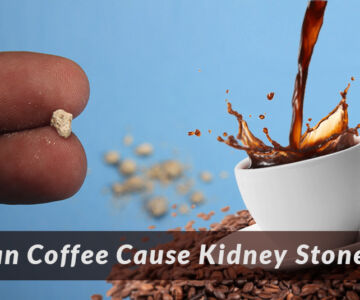
When we talk about coffee, it is a beverage that has worldwide popularity and also has some intense study into health effects. Many kinds of research show how it impacts our immune system and also remains a risk factor for heart disease & cancer. And the debate if coffee is good or bad has been underlying for thousands of years ever since it was discovered.
Population-based epidemiological researches show an association between intake of coffee and protective effect on kidney function. Kidney stone disease is definitely a global health issue that is said to have a high recurrence rate even after stone removal. So can coffee cause kidney pain?
In a Korean study where 2,600 women including diabetics who consumed coffee were associated with a decreased risk of kidney disease. But yes, population-based surveys are definitely not enough to draw conclusions.
Thereby, a meta-analysis that was published in 2016 answered this crucial question. It showed no association between coffee consumption and kidney disease in male patients. In the past, scientific studies showed that caffeine has the risk of increasing the growth of kidney cysts in patients who suffer from autosomal dominant polycystic kidney disease.
There has been a number of studies that have been conducted to understand the association between kidney stones and milk products. The evidence indicated that consumption of milk or milk products has no association with the risk of kidney stone formation.
Avoid kidney stone-forming foods like spinach, beets, okra, cocoa powder, French fries, almonds and cashews, raspberries, sweet potatoes, chocolate, tea, etc. Stay away from salty foods, meats, and other animal protein. You should drink a lot of water.
Intake of fructose is associated with an increased risk of developing kidney stones. Fructose is found in table sugar & high fructose corn syrup.
Kidney stones, at times, have no definite or single cause. But yes, there may be several factors like oxalate, calcium, and uric acid. Also, your urine may probably lack the required substances that will prevent crystals from sticking together.
This may create an environment for kidneys to form stones. Possible causes may include drinking very little water, too much or too little exercise, obesity, eating food with too much sugar or salt, weight loss surgery, etc. Family history and infections may also be some important reasons in some people.
Drink more water. It is the best way to prevent kidney stones. If you drink less water then your urine output will be low.
This means urine will be more concentrated and may not dissolve urine salts and may lead to stones. Orange juice and lemonade are good options that help in preventing kidney stones.
A high salt diet can increase the risk of calcium kidney stones. The high salt content in the urine will prevent calcium from being absorbed from the urine into the blood. This leads to high urine calcium and then leads to kidney stones. By eating less salt, urine calcium levels are also maintained low.
Some kidney stones are actually made of oxalate, which is said to be a natural compound found in foods that bind along with calcium in urine which then forms kidney stones. Some foods include: wheat bran, peanuts, soy products, rhubarb, etc.
You can also talk to your doctor about preventive medications that can help you dissolve kidney stones. And the type of medication that your doctor will prescribe will be based on the type of kidney stone you have. Alongside, it is crucial to follow effective strategies which can prevent the formation of new stones.
So the bottom line is kidney stones are common! Preventive methods may reduce the risk. Stay hydrated and make some dietary changes. If you have any condition that may increase the risk of kidney stones then talk to your doctor about it!
As caffeine can cause increased blood flow, it can strain your kidney. So you can avoid coffee if you have kidney stones.
If consumed on average, coffee is an accepted beverage for your kidneys.
Avoid drinking colas. It is high in phosphates which promotes the formation of kidney stones. Processed drinks, added fructose, sucrose can be avoided.