September 10, 2025
 How to Improve Public Speaking Skills for Studentsby admin / December 16, 2025
Live Better, Live Smart
Heart health is something most people forget until a problem occurs. In fact, our bodies frequently signal us with early warning signs way before a big heart problem occurs. If you can recognize the first signs of a heart problem, you will be able to intervene faster, get help from a doctor and maybe, stop the situation from getting worse.
Cardiac problems may result in a severe chest pain that feels like a stabbing or in a sudden loss of consciousness. Nevertheless, the majority of times, the signs are silent and, hence, can be negligently skipped or even wrongly recognized as stress, getting older, or simply being tired. This blog explains those early symptoms you should monitor and when to take them seriously.
The heart is the most hard working organ in the body. It keeps on pumping blood and oxygen to all the parts of the body. The signs of disease in the heart may take time to show up. However, they can still be noticed if one is vigilant enough. Detecting the diseases at such an early stage provides doctors with the opportunity for quick and easy treatment of conditions.
If acted upon early, this can:
One of the greatest instruments you have is the ability to listen to what your body tells you.
It is true that everyone gets tired sometime, but unidentified or very extreme fatigue is probably the most disregarded early sign of heart diseases. In case activities such as walking, going up the stairs, or doing the housework suddenly exhaust you, then most probably the heart is going to be the reason for it, as it is not able to pump the blood properly.
Usually, this kind of exhaustion:
In particular, women may associate fatigue with the early symptoms of heart diseases.
It is perfectly alright to have difficulty in breathing after doing some very hard exercises. But feeling like this while resting or doing something that is only slightly physically demanding is definitely not normal.
One of the symptoms accompanied by a situation when the heart is not able to pump a sufficient amount of blood to the body, may be shortness of breath. The next scenario can cause shortness of breath:
All of these are very important early signs of heart problems that must be taken seriously.
Chest pain is usually thought of as a symptom of a heart attack, but the initial discomfort related to the heart can be very different. The sensations may be:
The condition can come and go and one might even mistake it for indigestion or muscle strain. If it happens that the chest discomfort is caused by an exertion or emotional stress and, when relaxing, the discomfort disappears, it may be attributed to the heart.
Pain that extends beyond the chest area
Heart problems are not necessarily a cause of the pain in the chest only. The pain or discomfort can go along with:
This kind of pain coming from one place and going to another is the most typical indication of heart trouble in conjunction with fatigue or shortness of breath.
The swelling of the lower parts of the body can be one of the first indications of heart diseases, mainly of heart failure. When the heart is not pumping blood as it should, the blood can go back to the veins leading to fluid retention in the tissues.
It is quite probable that you will become aware of some of the following signs:
Although swelling may be a result of various causes, a doctor should be the one to check it if the swelling is consistent or cannot be explained.
Once in a while skipped beats is a situation that happens to everyone, but very frequent or continuous changes in heart rhythm can scare the fact that it can be a signal of a problem.
These conditions can happen both when a person is at rest and when involved in physical activity. Although not necessarily dangerous, these are some of the early signs of a heart condition, which thus indicates the need for doctor’s evaluation.
Dizziness or Lightheadedness
Feeling dizzy, faint, or lightheaded can happen when the heart isn’t pumping enough blood to the brain.
This may occur:
If dizziness is happening again and again, it should not be considered as a joke, especially if it comes together with other symptoms.
Surprisingly, a great number of people are puzzled by the fact that heart problems can manifest through stomach-related symptoms. What might be early signs of heart problems such as nausea, indigestion or bloating, especially in females.
Some if the symptoms can be:
In case there is digestive discomfort together with chest pressure or fatigue, it is absolutely necessary to be taken seriously.
Feeling cold or having sweat out and not due to any physical work or heat can be a sign of heart problem. The mentioned sweating type is most likely:
This is one of the most urgent early signs of heart problems and thus should be followed by immediate medical attention.
Difficulty to sleep, waking frequently during the night, or loud snoring may also be connected to the health of the heart. Conditions like sleep apnea increase the pressure on the heart and thus increase the chance of developing heart disease.
The warning signs are:
By improving the sleep quality, one can give great support to the heart health.
It is advisable to see a medical professional if you experience one or more of the early signs of heart problems, especially when they are new, persistent, or getting worse. Don’t wait until the symptoms get really bad.
If you experience any of the symptoms below, go to a medical facility as soon as possible:
The difference that early intervention can make is everything.
Not all heart conditions can be stopped from happening, but good habits can lower the danger greatly:
The little things that you change today can result in a much healthier heart tomorrow.
Understanding the initial symptoms of heart problems is a great way to take control of your own health. Usually, the body is a bit indirect before it becomes obvious. Noticing small changes, trusting your gut feeling and going to see the doctor at the right time can be a rescue not only for your heart but also for your life which is invaluable.
Good heart health is not only a matter of handling crises well—it requires being aware, preventing and taking care of oneself consistently.









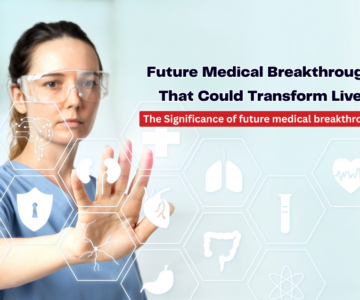
The future medical breakthroughs we discuss are nothing less than the next wave of medical advances, which are not only going to improve health care incrementally but also transform it completely. They are not minor changes made to existing treatments; rather, they are major innovations with the power to change the whole game in the areas of disease diagnosis, treatment and even prevention.
In this article, we will review a number of the most exciting and significant developments in the field of medicine, explain their importance and indicate the possible consequences for you or your loved ones.
Recent medical advances indicate that progress is capable of increasing steeply very quickly, but at the same time, they display the large area of the unmet need that still exists. Gene-editing tools, regenerative medicine, nanotechnology and artificial intelligence are the technologies of the world.
There are very significant consequences when a breakthrough is turned into an actual treatment. This means better survival, less side effects, faster recovery and even a possibility of treatment for diseases that were historically considered untreatable.
One such example may be the personalized mRNA-targeted therapies that are widening the range of virology and oncology. Besides that, AI application in radiology, diagnostics and therapy is already contributing to increasing eruption accuracy and early intervention.
For instance, technologies like tailored mRNA-based therapies expand the suite of tools beyond infectious diseases into cancer and other diseases. Artificial intelligence employed for image analysis, diagnostics and treatment planning already results in more accurate and early interventions.
When we say “future medical breakthroughs,” what we really are talking about is “breakthroughs in action”-that is, translating lab innovation into patient reality.
These are the most optimistic medical fields that breakthroughs would radically change people’s lives.
CRISPR and similar technologies have made it possible to genetically modify defective parts of the DNA with absolute accuracy. This allows the targeted elimination of diseases resulting from single mutations in genes, such as sickle cell anemia and some hereditary conditions, already in their most inner parts.
Not only inherited diseases but also gene therapy is being applied in cancer, immunology and rare diseases. Once the underlying problem can be solved, the kind of treatment shifts from support to curing. That’s a huge transition.
Regenerative medicine, one of the most experimental and futuristic areas of medicine, is slowly but steadily gaining acceptance due to its primary ability to generate, restore and fully rejuvenate the hurt body parts like tissues and organs.
The use of 3D printing for implants and human tissues is already an active research area. It is hoped that biofabricated organs will not only eliminate the demand for donors but also lessen the threat of rejection and lead to better living conditions. This is not limited to mending, it is about rejuvenation.
AI and Machine Learning are fast becoming the primary players in diagnostics, personalized medicine and disease forecasting. Such systems have the capability to identify very fine patterns in images that might not be seen by human eyes, to develop preventive models that signal at-risk patients before an emergency and to customize treatments according to specific requirements.
To put it differently, a more intelligent healthcare system is in place which has less unexpected events and higher accuracy.
If you want deeper insights into how AI will reshape the healthcare industry over the next decade, check out Am I AI Ready: Empowering People to Lead in the Intelligent Future — read the book now (available in eBook & paperback).
Nanotechnology is a cutting-edge technique that allows the precision of medicine in a manner never seen before by introducing the concept of targeted therapies that deliver drugs only to the specific locations where they’re required. Systems for drug delivery utilizing nanoparticles are in use to not only minimize side effects but also to enhance the drug’s effectiveness at the same time.
Indeed, these innovations are transforming the treatment procedures into a safer, more efficient and to some extent, a more personalized process.
Health services are not restricted to hospitals anymore. The healthcare industry is changing with remote monitoring, wearable gadgets and telehealth platforms.
The increasing usage of health-monitoring technology that can be worn has created new avenues for people to take care of and monitor their health. Medical professionals are able to notice early warning signs due to the uninterrupted stream of data, whereas individuals are becoming more participative in the process of health care.
Future medical breakthroughs will not only bring great changes in research laboratories but also in all walks of life. Here are some ways how these advances can influence you:
The acceptance of these breakthroughs into mainstream medicine is not just about technology; it is an issue of equity, policy and humanity as well.
These developments are extremely appealing; however, they still face challenges in reality. A large number of the most hopeful treatments are not mature yet, so more trials need to be conducted to find out if they are a secure and lasting option.
Moreover, ethical and regulatory concerns in gene editing, data confidentiality and AI discrimination accompany the issue. The high costs of revolutionary healthcare are still a great barrier, especially in some parts of the world where people do not enjoy this technological advance. The implementation of digital health solutions will be successful only if there is a strong infrastructure, excellent data protection and proper education for patients and healthcare providers.
In conclusion, scientific breakthroughs are not only about new findings but also about their implementation, making them available to more people and creating a trustworthy environment.
Future medical advances will not be available to only those who wait; both individuals and organizations can begin to take steps that help them benefit from the advances as they evolve.
There is an opportunity to change from a passive attitude and participate actively with.
The storyline of the future medical breakthrough has been remodeled from ‘someday’ to ‘now’. The future of medical breakthroughs is not defined by a single miracle cure but rather a range of innovations that work together to transform lives. Different medical technologies including gene editing, AI-driven diagnostics, regenerative medicine and wearables for monitoring have all made progress and are now moving from theory to practice.
The true potency of these breakthroughs resides not only in the scientific investigations that support them but also in their sharing, acceptance and accessibility to people. The coming era of medicine will not only prolong life but will also improve lives.
Healthcare’s future is already here. It is happening at present and it is characterized by hope, accuracy and a plethora of options.
Also read: Top 10 Patient Safety Goals Every Hospital Should Prioritize
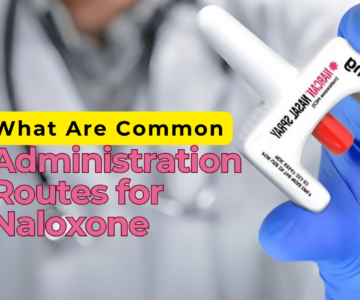
Naloxone is a life-saving medication used to reverse opioid overdoses. It works by quickly binding to opioid receptors in the brain, displacing the opioids, and restoring normal breathing. Administering naloxone promptly can prevent fatal overdoses, making it an essential tool in emergency situations. Knowing the common administration routes for naloxone is crucial for individuals who may need to respond to overdoses.
Knowing the different administration routes for naloxone allows individuals to act quickly and effectively in an opioid overdose situation. Intramuscular and intranasal sprays are widely used in community settings, while IV injections are reserved for healthcare professionals. It’s essential to receive training on how to recognize an overdose and how to properly administer naloxone to save lives.