September 10, 2025
 What Is Greywater Recycling and Why It’s a Game-Changer for Sustainable Livingby admin / October 8, 2025
Live Better, Live Smart
Coin-operated machines and storefront shops are no longer the laundry business. Nowadays the business has moved forward as a technology-based, customer-centric service industry. From old-fashioned storefront laundry to mobile pickup and delivery, business models are not just one, but numerous options to find the best business model for laundry.
Now, here’s the actual question: Which business model is ideal for laundry in today’s world storefront or mobile pickup?
Let’s go deep into the advantages, disadvantages, profitability and future trends influencing the laundry business.
Storefront laundromats or laundry stores are businesses with a physical location where customers drop off and pick-up laundry. They might have self-service equipment, wash-and-fold and dry cleaning services.
It is a laundry service which offers a door-to-door service whereby dirty laundry may be collected, washed, dried, ironed and delivered back to the customer’s home.
A huge number of entrepreneurs are operating a hybrid model that combines a storefront, coupled with mobile pick-up and delivery.
Examples: Top franchises such as Tumbledry and Fabrico are embracing hybrid models to squeeze profits.
| Factor | Storefront Laundry | Mobile Pickup & Delivery |
| Startup Costs | Moderate (rent, equipment) | High (facility + vehicles + app) |
| Operating Costs | Medium (utilities, staff) | High (fuel, drivers, tech) |
| Customer Reach | Local only | City-wide / Regional |
| Profit Margins | Stable, lower risk | Higher potential, but volatile |
| Scalability | Limited | Highly scalable |
| Flexibility | Fixed hours | On-demand, 24/7 with apps |
The best locations for laundromats would include multi-family housing in densely populated urban areas, schools and offices or high foot traffic areas.
Yes, if you have a good service and the right location, laundries that serve front customers should be a steady revenue producer.
In general, charges would be $1.25 – $2.50 per pound for a standard wash-and-fold service and would depend on your area.
High utility bills, dependence on labor and increased competition.
The industry estimates that about 25–30% fail in the first five years, primarily because of bad location and failure to differentiate.
You’ll require permits, a trusted washing equipment, delivery arrangements and marketing among your neighbors.
Yes, most franchises provide tech support, branding and logistics, decreasing risk for new business owners.
The laundry industry is thriving with opportunity. The best business model for laundry is storefront for stability, mobile for scalability, hybrid for growth. With increasing demand, tech integration and environmentally friendly solutions, there’s never been a better time to get into this arena.
Over to you now: If you were to launch a laundry business today, would you go for a storefront, a mobile pickup service or a hybrid model and why?
Also Read: The Rise of Hyperlocal Delivery Business: Why It’s the Future of Last-Mile Logistics









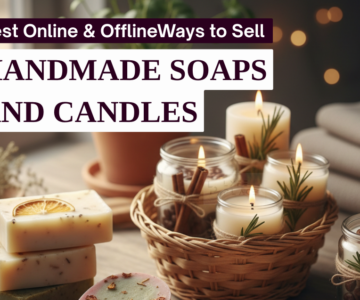
The demand for handmade soaps and candles is on the rise. Buyers prefer more natural, sustainable and hand-made-quality products to counter mass-produced products. After a long day, a candle with a distinct scent of lavender can be lit in order to relax. Handmade soaps add a personal touch to your bath and are eco-friendly. They can also be customized for different choices.
If you are interested in taking the plunge into a business, learning how to market handmade soaps and candles is a great business space to start and can also market them online.
Let us find out the best ways to sell handmade soaps and candles that are effective now.
At present, the consumers are aware of and appreciate the products that are natural, packed in environmental friendly, sustainable ways and contain only natural ingredients. On the contrary, the people in the market have a soft spot for natural soaps produced from organic oils, pure vegetable soaps and soy or beeswax candles.
Best niches: Organic, fragrant, luxury, canned and vegan soaps and candles.
Some new niches are:
Before letting go of your stock, check that your products are in conformity with the safety and cosmetics jurisdiction. The labeling of ingredients, usage instructions and warnings (especially for candles) should be very clear.
The majority of nations need a business license or small business registration. In local markets, vendors may require a temporary permit.
Verifying the laws of your area beforehand prevents you from running into issues later.
A personal online boutique gives you the power to control your brand image, prices and customer relations completely. You can set up your online shop on Shopify or WooCommerce without writing a single line of code.
You can use the following platforms for selling your unique handmade product., Etsy, Amazon Handmade just the other new options Meesho and Flipkart.
Instagram Reels, TikTok videos and Pinterest boards with product photography can generate massive organic traffic. Short tutorials such as “how I create my lavender candle” are highly effective.
Partner with subscription box companies or join online fairs to deliver your products to more households.
Events are wonderful for immediate feedback and establishing repeat customers. An attractively decorated stall can bring back repeat customers.
Boutiques, yoga centers and health food stores adore carrying hand crafted candles and soap that appeal to their customers.
Spas and salons tend to purchase in bulk for use and resale. Wholesale discounts assist in establishing partnerships.
Never underestimate neighbors, street parties and local WhatsApp groups for that first few sales.
Elegant, sustainable packaging provides perceived value. A plain kraft box with a natural feel tends to be best.
Customers don’t just purchase soap, they purchase for self-care rituals. Be honest, share your story, why you started and what makes your products unique.
Provide discounts for return customers, referral rewards or subscription discounts for monthly shipments.
Begin by accepting pre-orders from friends or on social media, then make in batches to save money.
Online starter kits provide molds, wax, oils and labels—all perfect for those with low investment.
When orders increase, outsourcing packaging or delivery can leave your time for producing.
Supply to hotel, spa and corporate gift firms can yield regular revenue.
Once you’re established, consider international sales via Etsy or international shipping.
You can set up a store on Shopify and showcase in Etsy or Amazon Handmade; also you can advertise and drive traffic to your “store” using social platforms such as Instagram or TikTok.
Begin with craft fairs, neighborhood shops, spas and community events. Customized stalls and packaging draw in customers.
Register your company, sell online marketplaces and approach neighborhood stores or spas. Build credibility with open labeling.
Obey cosmetic and safety labeling regulations. Fire safety testing is needed for candles in some areas.
Make use of the e-commerce websites such as Flipkart, Meesho and Etsy India. Social media branding is also very effective.
One can begin with a small amount of ₹5,000–₹10,000 in India with a business kit. Expansion will require increased investment in bulk raw materials and branding.
Selling homemade soaps and candles is a golden chance. Consumers are in search of legitimate, green and carefully-produced products and this is exactly what small businesses have to offer. Your soap and candle company can start as a side hustle, then grow into a well known brand with smart marketing and a mix of online and in-person selling opportunities.
Start impassively, sparkle brightly!!
With some clever marketing tips, both digital and in-person strategies, your brand can emerge from the pack in this upstart market.

The world of actuarial science may seem niche to some, but for entrepreneurs and business professionals, it offers invaluable insights. Reddit’s vibrant actuarial community, found in subreddits like r/actuary, is a treasure trove of discussions, resources, and advice that can significantly benefit those looking to make data-driven decisions in business. Here’s how you can leverage “Actuary Reddit” for entrepreneurial success.
Actuaries specialize in risk assessment and management using mathematics, statistics, and financial theory. While their primary roles are in insurance, pensions, and finance, the skills and insights of actuaries are valuable across industries. Entrepreneurs and businesses can gain from actuarial approaches to:
Reddit serves as a platform where professionals, students, and enthusiasts discuss actuarial science and its real-world applications. For business owners and entrepreneurs, engaging with actuarial subreddits offers:
Here are some recurring themes in the subreddit that entrepreneurs can benefit from:
Actuarial discussions often revolve around managing financial and operational risks. Entrepreneurs can learn how to apply these strategies to safeguard their business against market fluctuations, competitive threats, or economic downturns.
Actuaries frequently discuss the latest trends in insurance policies and regulatory changes. Entrepreneurs can use these insights to choose the right insurance for their businesses or ensure compliance with industry standards.
If you’re building a team or looking to hire actuaries or data professionals, Reddit can provide advice on recruitment, career development, and understanding the value actuaries bring to a business.
Discussions about using predictive modeling, machine learning, and AI for actuarial work are common. Entrepreneurs in tech and data-driven businesses can adapt these techniques for customer analytics, product development, or market research.
The actuarial community on Reddit is an underutilized resource for entrepreneurs looking to make smarter, data-driven decisions. From risk assessment strategies to innovative approaches to financial planning, the insights shared by actuaries can empower businesses to thrive in uncertain markets. Whether you’re a seasoned entrepreneur or a budding startup founder, taking a dive into Reddit’s actuarial discussions might just be the strategic edge you need.