September 10, 2025
 Elon Musk’s Empire: The $1.5 Trillion Vision Reshaping Industriesby admin / October 7, 2025
Live Better, Live Smart
Have you ever noted about how much clean water you use per day?
Whether using it to flush the toilet, water the lawn or take showers, you are utilizing tap water of drinking quality to do something which is not drinkable. In the meantime the world becomes increasingly cramped on fresh water supplies.
Greywater recycling serves as a bridge allowing us to gently retrieve the used water instead of sending it to the drain for eternity. We can collect that water, treating it and then using it over again. This contributes to saving water for the environment.
Greywater is waste water from non-waste sources like showers, hand wash basins, dishwashers and washing machines etc. Greywater can always be treated and reused for non-potable purposes. Unlike blackwater which has raw sewage in it, greywater is more manageable but not potable.
At any one time, approximately 60% of a dwelling’s wastewater is greywater. That’s a big proportion we could recycle rather than waste.
| Feature | Greywater(showers, laundry) | Blackwater(toilets, sewage) |
| Main contaminants | Soap, detergents, oil and food bits | Fecal matter, urine and pathogens |
| Treatment required | Light to moderate | Heavy, complicated |
| Safe reuse possibilities | Irrigation, flushing, cleaning | Limited (after advanced treatment) |
As per Better Health Victoria’s guidelines (2024), greywater can be reused safely for non-potable purposes, while blackwater must undergo advanced treatment.
For example, a Melbourne family of four reuses up to 100 liters a day by redirecting shower water into a basic sand-filtered tank. It’s a cycle that reduces waste and gets every drop of water to go farther.
Not all greywater systems are treated equally. They can be as high-tech or as simple as you require.
Greywater recycling isn’t an ideal process. There are some challenges:
The best part? With proper products, quality design and education, these are very easily overcome challenges.
Homeowners don’t require specialized equipment to begin recycling greywater. Here are some easy ways:
Tip: Don’t use greywater from bleach or abrasive chemicals loads on your garden plants.
Greywater recycling is not just in homes, it’s getting big everywhere.
Cities like Melbourne, Tel Aviv and Bengaluru are even starting to develop greywater systems for the purpose of city planning and reducing the effects of water stress.
In the coming years, greywater recycling will grow only smarter.
Cities can soon aspire to a “circular water economy” where almost all wastewater is reused for non-potable purposes.
Yes, when handled appropriately. It is suitable for irrigation, flushing and cleaning but not to drink.
Yes, for landscaping and gardens but not on crops.
Most homes can reduce usage by 30–50%.
Simple systems are budget-friendly, though sophisticated units can be costly. The bonus: they reduce bills in the long term.
Not if it is treated and utilized promptly. Old, untreated greywater does have an odor, so storage has to be controlled.
Reclaimed water is usually derived from sewage (blackwater). Compared to that, greywater recycling employs home wastewater that is less difficult to treat.
Greywater recycling demonstrates that even tiny changes can have a large impact. By recycling water, in one way or another in our homes, workplaces or around our cities we save money, support our gardens or landscaping and help the environment. What used to be “waste” can now serve a purpose.
Every drop reused counts toward a more sustainable future. Start small and see how much impact you can make.
Also read: How to Start a Greywater Recycling Solutions Business: Step-by-Step Guide for Entrepreneurs










If you work in digital marketing in 2026, you already know AI is not a “maybe later” thing. It is in your tools, your reports and even your content ideas. The question is not whether to learn it, but how to start without wasting time or money.
This guide covers some of the best AI Courses for Digital Marketers for professionals who want to build practical AI skills, earn free certifications and stay ahead in the rapidly changing marketing industry.
Here are 10 free online AI certification courses that are actually useful for digital marketers, written in a simple, practical way so you can pick one and begin.
Marketing has changed a lot in just a few years. Tasks that once took hours can now be done much faster with AI helping you plan, write and optimize.
With AI tools, you can look at how people behave, what they click on and when they are most likely to buy. That helps you send better messages to the right people, without guessing.
When you finish an AI course or certification, you:
You do not need to become a tech person. You just need to learn how to use AI as a smart assistant in your marketing work.
AI is not magic, but it does make many marketing tasks easier:
You can tailor messages to different groups based on what they actually do, not just on basic labels.
Scheduling posts, adjusting ad spend and sending follow-up emails can run automatically, so you have more time for planning.
AI can quickly find patterns in large data sets, like which audiences convert better or which content performs most.
AI can help you draft ideas, write headlines, create social copies and outline articles so you start from something instead of from zero.
If you ignore AI, you will slowly fall behind marketers who use it to work faster and smarter.
The AI Courses for Digital Marketers listed below have been selected because they are beginner-friendly, practical and offer valuable certifications at no cost.
These are all either fully free or have a free version that gives you real learning plus a certificate.
Time: 2–3 hours
Good for: Beginners, content marketers
Why: Simple, practical and gives a HubSpot certificate.
Course link: AI Marketing Training
Time: 1–2 hours
Good for: SEO and content marketers
Why: Shows how to use AI inside SEO and content tools you may already know.
Course link: Become an AI-Powered Marketer
Time: About 4–6 weeks if you study regularly
Good for: People who want a structured, deeper course
Why: More formal learning with a recognized certificate.
Course link: AI in Digital Marketing
Time: 1–2 hours
Good for: Newcomers to AI
Why: Very simple, completely free and easy to follow.
Course link: AI in Digital Marketing
Time: 3–5 hours
Good for: Professionals who want a LinkedIn-recognized certificate
Why: Clear focus on using AI for real marketing tasks.
Course link: Generative AI for Marketing Professional Certificate by the American Marketing Association
Time: 2–4 hours
Good for: Practically minded learners
Why: Hands-on examples; often free during promotions.
Course link: AI in Digital Marketing: Master ChatGPT & 100+ AI Tools
Time: 2–3 hours
Good for: Marketers using CRM or automation tools
Why: Free and aligned with real business platforms.
Course link: AI for Marketers Course
Time: 2–4 hours
Good for: Beginners and intermediate marketers
Why: Short, practical and gives a free certificate.
Course link: AI Strategies for Marketing and Sales
Time: 2–3 hours
Good for: Visual learners
Why: Video-based, with 20 real examples of AI in marketing.
Course link: Digital Marketing With AI Full Course 2026 Updated
Time: 2–4 hours
Good for: Indian marketers and startup professionals
Why: Practical, with examples that fit local business contexts.
You do not need to do all ten. Pick one that matches your level and role and finish it properly.
Course link: Master AI in Digital Marketing with Certification
Also check: Maximizing the Impact of Video Content on Social Media
With so many AI Courses for Digital Marketers available online, choosing one that matches your experience level and career goals is the best way to get started.
Ask yourself these simple questions:
For business: Optimizing Your Business Recruitment Strategy with AI Resume Screening
When you finish a good AI course, you will notice:
Right now, AI is part of normal marketing work. You will see:
The marketers who do well in 2026 are those who use AI to work smarter, not those who ignore it.
AI Courses for Digital Marketers are becoming essential as AI continues to transform content creation, SEO, advertising, analytics and marketing automation. The best approach is to start with one simple course, learn a few practical things and then use them in your daily work.
Pick one of the free courses above, finish it and try at least two AI features in your campaigns or content. That small step will put you ahead of many marketers who are still waiting.
Start with HubSpot’s AI for Marketers or MyGreatLearning’s AI in Digital Marketing. Both are simple, short and free.
Yes. None of these courses require coding or technical knowledge. They are designed for marketers, not developers.
A certificate is not mandatory, but it helps for your profile and shows you have structured learning. It is especially useful if you want to add it to LinkedIn or your resume.
If you start using AI tools in your daily work, you will often see faster content creation and better insights within a few weeks.
Most of the courses listed are free to access and complete. Some may offer optional paid upgrades, but the core learning and certificate are available without paying.
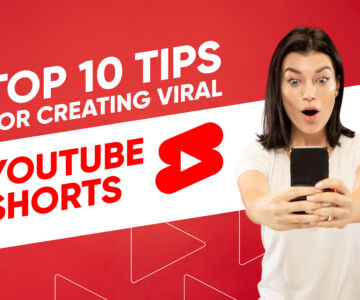
In today’s fast-paced digital landscape, short-form content is becoming increasingly popular, with YouTube Shorts emerging as a powerful platform for creators to capture audience attention quickly and effectively. With a maximum length of 60 seconds, YouTube Shorts offers a unique opportunity to create engaging, bite-sized content that can reach millions of viewers worldwide. However, the challenge lies in crafting videos that not only grab attention but also encourage viewers to engage and share.
Whether you’re a seasoned content creator or just starting, understanding the nuances of creating viral YouTube Shorts can significantly boost your reach and influence. This comprehensive guide will walk you through the top 10 tips for creating YouTube Shorts that have the potential to go viral, complete with practical examples and shortcuts to streamline your content creation process.
Creating viral YouTube Shorts is an art that combines creativity, strategic planning, and constant learning. By following these detailed tips and utilizing the provided shortcuts and examples, you can enhance your content’s potential to go viral. Remember, the digital landscape is always evolving, and staying updated with the latest trends and tools is crucial for success. Experiment with different formats, analyze your performance, and continuously iterate based on viewer feedback. With dedication and creativity, your YouTube Shorts can capture the attention of millions and significantly grow your audience. Start experimenting, stay consistent, and watch your channel thrive!