September 10, 2025
 The Rise of Pet-Friendly Workspacesby admin / December 6, 2025
Live Better, Live Smart
The gut-brain connection is probably the most surprising revelation in health science that has been made lately. For a very long time, the common belief was that the gut performs digestion only. Recent investigations show that the gut talks a lot with the brain via nerves, hormones, immune cells and chemical messengers. The interaction, among other things, influences the feeling of happiness, concentration and stress, digestion, resistance to disease and general health. Knowing this link can be of great help to you in making healthy and wise decisions for your gut as well as for your mind.
The gut-brain connection refers to the communication that is exchanged in two ways between the digestive system and the central nervous system. These two together form the Gut Brain Axis, as named by scientists. This axis is basically a tuning system that not only regulates the digestive process but also emotional well-being, appetite, inflammation and even cognitive function.
Millions of neurons make up the gut’s own nervous system. Because it can operate on its own and it is always sending signals to the brain, this is sometimes referred to as the second brain.
At the core of the body, this nerve is one of the largest and serves the function of a main road for the signals which are sent back and forth between the bowel and the brain.
The gut microbiome is the community of bacteria that consists of trillions of organisms which live in the human intestines. One of the things these microorganisms do is to produce a multitude of substances including neurotransmitters that greatly affect one’s mood and brain operation.
The three systems being so tightly interwoven that they not only affect each other but also depend on each other. When the link is strong, the brain and digestion work well. But if the link is broken, they can both become stressed, experience pain and have changes in their emotions.
One of the most revelatory aspects of scientific studies is that the gut influences brain function and mental health in several significant ways.
Almost all people express their surprise when they find out that most of serotonin is produced in the gut. Serotonin is one of the major neurotransmitters that are significantly dependent on the mentioned functions – mood, sleep, appetite and memory. In addition, intestinal microbes play a vital role in the process of GABA production a neurotransmitter that brings calmness and relieves anxiety. A healthy gut microbiome will thereby be more conducive to stable neurotransmitter production.
Most of the immune system is located in the gut. A balanced microbiome keeps inflammation low. When there is imbalance or dysbiosis harmful bacteria can trigger inflammation which can influence the brain and increase the risk of mood disorders.
Healthy bacteria create short chain fatty acids after breaking down fiber in food. These compounds help reduce inflammation support gut lining health and positively influence brain function and mental well-being.
The connection between the guts and the brains is a two-way communication. A person’s brain can have a strong effect on how they feel physically in their stomach. Stress and anxiety can cause altered digestion, increased sensitivity of the stomach and feelings of bloating or discomfort. For example, when a person becomes nervous, they may feel “butterflies in their stomach.”
This communication pathway may explain why a person with digestive issues usually experiences anxiety and/or low mood and that when a person takes care of their gut health, they may also take care of their emotional health.
A balanced microbiome is linked with better emotional stability reduced anxiety and better stress management. People with gut imbalance often report feeling more irritable stressed or low.
Symptoms of diseases such as irritable bowel syndrome, indigestion and bloating are mainly affected by stress and the gut-brain axis. Taking care of the gut can not only enhance the digestive process but also alleviate the pain.
Studies suggest that a healthy gut may provide for better memory learning and mental clarity. Gut inflammation or imbalances could negatively affect focus, energy and cognitive performance.
Gut Health Provides:
All of these factors lead to better mind and body health.
Foods that contain a lot of fiber such as fruits, vegetables and whole grains, legumes, nuts and seeds are the food sources that “good” bacteria in the digestive system need. When there is a healthy bacterial population in the digestive system, the bacteria produce substances that are necessary for a healthy brain function.
Commercial products made from fermented foods like yogurt, kiefer, kimchi, sauerkraut and other fermented vegetables are natural sources of probiotic bacteria which improve the overall microbial diversity in the digestive tract.
Processed foods are the microbiome’s enemies which ultimately lead to inflammation. Removing refined sugar from your diet and reducing the intake of junk food will definitely help your body to get back its natural balance.
The stress factor has an enormous influence on the Gut Brain Axis. Methods like mindfulness, deep breathing, sufficient sleep, yoga and relaxation can be beneficial for both the gut and brain health.
Exercise is one of the ways to increase diversity of the gut bacteria that you have. Besides, a workout also helps digestion, and increases mood and energy levels.
Water plays a major role in freeing the digestive system and thus it is the main supporter of the gut environment to be kept in balance.
Immoderate use of antibiotics is among the reasons that result in the disappearance of the healthy bacteria in the gut. When you are taking antibiotics, always adhere to a doctor’s guidance.
Investigations about the gut-brain connection are still a work in progress and a lot of aspects of it are still not clear.
They are working on the identification of the pathways through which gut bacteria affect the central nervous system and the correlation between the stomach lining inflammation and symptoms of anxiety, depression, Parkinson’s disease and Alzheimer’s disease. Early findings are promising; however, a larger number of human-based studies are required to comprehend these interrelations fully.
Besides that, researchers have their eyes on another aspect of science to determine if certain probiotics, also called psychobiotics, may be able to provide direct support to mental health in the future. Although the outcome in this area is intriguing, this domain is still at the initial stage and further experiments are necessary before any firm decision can be made.
What remains undisputed is that the gut has a lot more connections with the brain than was previously assumed and a well-balanced gut flora can promote mental as well as physical health over time.
Yes- disturbances in the gut microbiome may alter neurotransmitters and raise inflammation that can have an effect on anxiety and mood.
Absolutely. Modern research corroborate the incessant interaction between the two via nerves, hormones and immune signals.
Individuals that change their dietary habits, manage stress and support their Gut Microbiome consistently reported improved Mood Stability.
Foods containing high levels of Fibers such as:
The Gut contains its own Nervous System with approximately 100 million Neurons. This large network is connected to the Brain and functions autonomously of the rest of the body.
Yes. Stress can slow down the rate that food passes through the Gut, increase sensitivity of the Gut and cause symptoms of bloating, discomfort and irregularities in bowel movements.










Winter olympic sports showcase spectacular athletic performances which require precise movements and enduring strength to overcome challenges by ice and snow. The Milano Cortina 2026 Winter Olympics (February 6-22) provide educational examples of resilience and innovation which motivate business leaders, entrepreneurs and sports fans to study these competitions.
The complete guide delivers 10 fundamental facts about winter olympic sports which include historical information, scoring details, medal data and current updates to assist professionals who study the games, tickets and investment opportunities.
The Milano Cortina 2026 olympic games will conduct 116 medal events which include 16 winter olympic sports between february 6 to 22 while curling previews started from february 4. During the past five years plus the upcoming 2026 olympic games the following cities hosted the events
| Year | Host City | Dates | Key Highlight |
| 2018 | PyeongChang, South Korea | Feb 9-25 | 102 events |
| 2022 | Beijing, China | Feb 4-20 | Dual Summer/Winter host |
| 2026 | Milano Cortina, Italy | Feb 6-22 | Ski mountaineering debut |
Olympics.com provides access to winter olympic tickets which will start Phase 2 sales soon. A ticket package which includes premium alpine finals events costs between €30 and €1,000.
The first Winter Olympic Games took place in Chamonix, France during 1924 and introduced winter sports as separate events from summer olympic competitions. The snow and ice events made their first international appearance when 258 athletes from 16 nations competed on frozen lakes.
2026 hosts 16 Winter olympic sports (116 events total, up from 109 in 2022):
Ski mountaineering debuts fully; women’s events hit a 47% participation record.
Winter olympic sports scoring adapts to each discipline:
116 medals awarded in 2026. Norway dominates historically (1,481 total). Italy eyes 6-8 golds as host. Bronze signifies top-0.01% elite status; mixed teams comprise 60% of events for equity.
| Category | Summer Olympic Sports | Winter Olympic Sports |
| Total Sports | 32 (329 events) | 16 (116 events) |
| Conditions | Warm/track/pool | Ice/snow/extreme cold |
| Nations | 200+ | ~80 |
| Tech Needs | Basic | G-sensors/radar guns |
Winter olympic sports demand cold adaptation; fewer participants reflect climate barriers.
The 2026 winter olympics will release their tickets through multiple sales phases which begin at Olympics.com. Premium events such as hockey finals and big air competitions can exceed €500. Executives prefer corporate hospitality packages while the mountain sessions at Cortina experience high demand which results in quick sellouts.
Curling stones weigh 42lbs (19kg), gliding 38m at 17kph. Sweepers control trajectory via micro-melt; stones nearest center “button” score. Canada leads with 38% wins.
Skeleton athletes race face-down at speeds up to 130 km/h on 50 kg sleds, experiencing forces of up to 5G. The sport has been part of the winter olympics since 1928, with helmets made mandatory after safety incidents in the 1990s. Full women’s participation and medal parity began in 2002.
Biathlon fuses skiing + shooting (180bpm heart rate). Its origin stems from 1767 Swedish patrols; shooting mistakes result in penalty time or additional laps. The 43 gold medals of Norway in the Biathlon World Championships and Olympics are proof of their cultural legacy.
The official competition schedule was finalised in late 2024 which includes 2900 athletes and 12 venues that use 65 percent of their existing space. The new events include Women’s large hill ski jump and mixed skeleton relay. NHL players return to hockey. The second phase of ticket sales will begin in the first quarter of 2026. Norway is expected to win 44 medals.
Winter olympic sports teach peak performance, ideal for business networking at VIP events or athlete sponsorships aligning corporate brands with excellence.
The 2026 Winter Olympics will feature:
The first winter olympics were held in 1924 in Chamonix. It was the first official winter games dedicated only to snow and ice sports.
Scoring depends on the sport:
The summer olympics feature approximately 32 competitions which athletes perform under warm weather conditions.
The winter olympics feature 16 different competitions which athletes perform on both snow and ice surfaces.
Countries with snowy regions compete in winter sports because these activities need cold climate conditions.
Yes. The official olympic website (Olympics.com) provides access to ticket sales. The ticket prices start from €30 and reach above €1,000 depending on the specific event. The next ticket phase is expected in early 2026. Early booking remains essential because top events reach full capacity within a short time.
Winter olympic sports evolve with innovation while honoring tradition. Milano Cortina 2026 delivers historic competition. Plan attendance or follow medal races now.
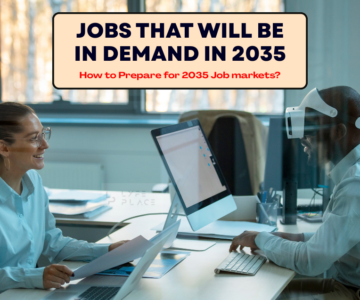
The 2035 job market will undergo complete transformation because of various technological advancements. The combination of automation and artificial intelligence together with climate change and fast digital changes will create new business environments. The traditional job market will lose some established positions but there will be a growing demand for newly developed and evolving work options. The 2035 job market will help you determine your educational path and skills development and career transition.
The following section provides an understandable description of the career options that will experience expansion during the coming 10 years.
Artificial intelligence will be woven into almost every sector, from healthcare, finance to manufacturing. The high demand for AI and machine learning specialists will result from this situation. The people in this field create and develop AI systems while they construct predictive models and assist businesses with safe and ethical automation processes.
If you enjoy problem‑solving, data and technology, careers like:
will likely remain among the most valuable roles through 2035.
The development of online banking, online healthcare, smart home technology and entire cities creates a need for data protection. Cybersecurity experts will be needed to defend systems from hackers, design secure networks and handle cyberattack incidents.
Common roles to watch:
As cyber threats continue to get more complex, these roles will still be in demand.
The executives in government and corporations will have to switch to cleaner energy sources by moving away from fossil fuels as climate change requires it. The time till 2035 will witness renewable energy and green tech job creation becoming the major growth sector of the economy.
Examples include:
The future workforce will seek professionals who specialize in carbon emission reduction and energy-efficient design and environmental impact assessment.
The healthcare sector will maintain its importance through 2035 which will become more reliant on technological advancements. The healthcare industry will continue to require doctors and nurses and allied health workers while creating new positions which combine medicine and technology.
Fast-growing healthcare-related jobs:
The increasing number of elderly people worldwide combined with greater mental health awareness will create sustained demand for healthcare providers.
Companies encounter an excessive data problem which blocks their access to crucial business insights. Data analysts and business intelligence experts transform raw numerical data into specific decision-making information. The team assists organizations by analyzing customer behavior patterns and through operational optimization and strategic planning processes.
Key roles:
These jobs are likely to remain in demand across almost every industry.
Software is practically everywhere we rely on today and it is not going to be any different by 2035. Developers of software and fullstack engineers will continue to be required to create applications, platforms and systems which will run businesses, governments and everyday life.
Popular paths:
If you are into coding and creating digital products, the opportunities in this sector will keep coming strong.
Factories, warehouses, hospitals and even homes are employing more robots and automated systems. Robotics and automation engineers work on designing, programming and servicing these machines.
Job titles:
As automation spreads, these engineers will be crucial for keeping systems running smoothly and safely.
The increasing pace of climate change will require climate and environmental scientists to develop better methods for studying and controlling its effects. They examine weather patterns together with pollution levels, biological diversity decline and environmental system conditions.
Examples:
These careers will be essential for governments and NGOs as well as private companies which aim to achieve their environmental goals.
Online marketing is here to stay, but it will change. Digital marketing and content creation will be in demand till 2035, however, the trend will be leaning more toward AI, powered tools, personalized content and data driven strategies.
Roles that may grow:
People who can blend creativity with analytics will be especially valuable.
As technology changes how we learn, education and online learning specialists will be needed to design courses, manage e‑learning platforms and support students in digital environments.
Examples:
Lifelong learning has been the pattern for a long time and so these jobs will still be relevant even way beyond 2035.
In a high-tech future, there will probably still be a demand for human-centric roles. Work that depends on empathy, communication and emotional intelligence is less likely to be automated.
Examples:
These functions are destined to gain prominence if workplaces continue their journey of becoming complex and fast paced.
While cities grow in population and their urban areas get better connected, they are becoming smarter. Urban planners and smart-city experts will be the ones to design cities in which people can live while still maintaining high operational efficiency and environmental sustainability.
Key areas:
The combination of technology and design together with public policy will create future urban environments which people will experience through these professions.
If you want to stay ahead of the curve, focus on:
The process of lifelong learning requires people to participate in educational courses, certification programs and practical experience through projects. The exact job titles may change, but the ability to learn quickly and work with technology will be the real advantage.
AI and automation together with climate change and digital transformation will create changes to the job market 2035. In 2035, there will be job openings for positions which demand technical skills and human expertise across various industries including AI system development, data protection, sustainable city design and healthcare.
If you want to start your career now choose fields that will develop into your future profession.
That way, you’ll be ready not just for 2035, but for whatever comes after.