September 10, 2025
 Why Failure is the Stepping Stone to Growthby admin / February 2, 2026
Live Better, Live Smart
The 2035 job market will undergo complete transformation because of various technological advancements. The combination of automation and artificial intelligence together with climate change and fast digital changes will create new business environments. The traditional job market will lose some established positions but there will be a growing demand for newly developed and evolving work options. The 2035 job market will help you determine your educational path and skills development and career transition.
The following section provides an understandable description of the career options that will experience expansion during the coming 10 years.
Artificial intelligence will be woven into almost every sector, from healthcare, finance to manufacturing. The high demand for AI and machine learning specialists will result from this situation. The people in this field create and develop AI systems while they construct predictive models and assist businesses with safe and ethical automation processes.
If you enjoy problem‑solving, data and technology, careers like:
will likely remain among the most valuable roles through 2035.
The development of online banking, online healthcare, smart home technology and entire cities creates a need for data protection. Cybersecurity experts will be needed to defend systems from hackers, design secure networks and handle cyberattack incidents.
Common roles to watch:
As cyber threats continue to get more complex, these roles will still be in demand.
The executives in government and corporations will have to switch to cleaner energy sources by moving away from fossil fuels as climate change requires it. The time till 2035 will witness renewable energy and green tech job creation becoming the major growth sector of the economy.
Examples include:
The future workforce will seek professionals who specialize in carbon emission reduction and energy-efficient design and environmental impact assessment.
The healthcare sector will maintain its importance through 2035 which will become more reliant on technological advancements. The healthcare industry will continue to require doctors and nurses and allied health workers while creating new positions which combine medicine and technology.
Fast-growing healthcare-related jobs:
The increasing number of elderly people worldwide combined with greater mental health awareness will create sustained demand for healthcare providers.
Companies encounter an excessive data problem which blocks their access to crucial business insights. Data analysts and business intelligence experts transform raw numerical data into specific decision-making information. The team assists organizations by analyzing customer behavior patterns and through operational optimization and strategic planning processes.
Key roles:
These jobs are likely to remain in demand across almost every industry.
Software is practically everywhere we rely on today and it is not going to be any different by 2035. Developers of software and fullstack engineers will continue to be required to create applications, platforms and systems which will run businesses, governments and everyday life.
Popular paths:
If you are into coding and creating digital products, the opportunities in this sector will keep coming strong.
Factories, warehouses, hospitals and even homes are employing more robots and automated systems. Robotics and automation engineers work on designing, programming and servicing these machines.
Job titles:
As automation spreads, these engineers will be crucial for keeping systems running smoothly and safely.
The increasing pace of climate change will require climate and environmental scientists to develop better methods for studying and controlling its effects. They examine weather patterns together with pollution levels, biological diversity decline and environmental system conditions.
Examples:
These careers will be essential for governments and NGOs as well as private companies which aim to achieve their environmental goals.
Online marketing is here to stay, but it will change. Digital marketing and content creation will be in demand till 2035, however, the trend will be leaning more toward AI, powered tools, personalized content and data driven strategies.
Roles that may grow:
People who can blend creativity with analytics will be especially valuable.
As technology changes how we learn, education and online learning specialists will be needed to design courses, manage e‑learning platforms and support students in digital environments.
Examples:
Lifelong learning has been the pattern for a long time and so these jobs will still be relevant even way beyond 2035.
In a high-tech future, there will probably still be a demand for human-centric roles. Work that depends on empathy, communication and emotional intelligence is less likely to be automated.
Examples:
These functions are destined to gain prominence if workplaces continue their journey of becoming complex and fast paced.
While cities grow in population and their urban areas get better connected, they are becoming smarter. Urban planners and smart-city experts will be the ones to design cities in which people can live while still maintaining high operational efficiency and environmental sustainability.
Key areas:
The combination of technology and design together with public policy will create future urban environments which people will experience through these professions.
If you want to stay ahead of the curve, focus on:
The process of lifelong learning requires people to participate in educational courses, certification programs and practical experience through projects. The exact job titles may change, but the ability to learn quickly and work with technology will be the real advantage.
AI and automation together with climate change and digital transformation will create changes to the job market 2035. In 2035, there will be job openings for positions which demand technical skills and human expertise across various industries including AI system development, data protection, sustainable city design and healthcare.
If you want to start your career now choose fields that will develop into your future profession.
That way, you’ll be ready not just for 2035, but for whatever comes after.










Elon Musk remains the richest billionaire in the world right now in 2026, boasting a fortune well over $700 billion thanks to breakthroughs in tech and space travel. This piece dives into the top richest folks out there, breaking down where their money comes from and the big 2026 trends like AI explosions and skyrocketing stocks, so you can really get what fuels this kind of massive wealth.
The top 20 billionaires together control a whopping $3.8 trillion in 2026, more than plenty of countries’ entire economies, mostly thanks to tech taking over. Every single one on this list has a net worth way past $10 billion, and Americans snag most of the spots because of all the AI and innovation wins.
Here’s the lineup from early 2026:
| Rank | Name | Net Worth (2026) | Country | Key Source |
| 1 | Elon Musk | $714.2B | USA | Tesla, SpaceX |
| 2 | Larry Page | $257.7B | USA | |
| 3 | Jeff Bezos | $251.4B | USA | Amazon |
| 4 | Larry Ellison | $242.6B | USA | Oracle |
| 5 | Sergey Brin | $237.8B | USA | |
| 6 | Mark Zuckerberg | $226.5B | USA | Meta |
| 7 | Bernard Arnault & family | $193.9B | France | LVMH |
| 8 | Jensen Huang | $162.5B | USA | Nvidia |
| 9 | Warren Buffett | $147.5B | USA | Berkshire Hathaway |
| 10 | Amancio Ortega | $147.0B | Spain | Zara |
| 11 | Steve Ballmer | $145.9B | USA | Microsoft |
| 12 | Michael Dell | $138.0B | USA | Dell |
| 13 | Rob Walton & family | $133.5B | USA | Walmart |
| 14 | Jim Walton & family | $130.8B | USA | Walmart |
| 15 | Alice Walton | $121.9B | USA | Walmart |
| 16 | Michael Bloomberg | $109.4B | USA | Bloomberg |
| 17 | Mukesh Ambani | $108.4B | India | Reliance |
| 18 | Bill Gates | $103.8B | USA | Microsoft |
| 19 | Carlos Slim Helu & family | $101.3B | Mexico | Telecom |
| 20 | Francoise Bettencourt Meyers & family | $89.8B | France | L’Oreal |
Forbes has been updating lately, and Musk even hit $839 billion by March, which just shows how fast these numbers swing around.
Elon Musk sits at the very top as the world’s richest billionaire, pulling in $714 billion mainly from his huge stakes in Tesla and a massive chunk from SpaceX, now valued at $800 billion. That SpaceX could go public this year, maybe pushing its value to $1.5 trillion and widening his lead even more.
His wealth has ballooned almost 30 times since 2020, all powered by things like AI in Tesla cars and his xAI projects. If you’re looking to take away something, it’s Musk’s gutsy moves into cutting-edge stuff like reusable rockets and self-driving tech that pay off big when you bet on bold ideas instead of playing it safe.
Tech is really driving the bus for these 2026 richest people. Google’s co-founders Larry Page at $257.7 billion and Sergey Brin at $237.8 billion rode Alphabet’s stock jumping 63% last year. Zuckerberg’s $226.5 billion comes from Meta’s smart AI tools for ads, and Bezos keeps $251.4 billion strong through Amazon’s cloud services and online shopping powerhouse.
Then there’s Jensen Huang, whose Nvidia shares went from $4.7 billion in 2020 to $162.5 billion now, fueled by insane demand for AI chips that sent stock up over 4,200%. It’s a clear sign for anyone starting out that jumping into AI and chips can unlock trillion-dollar plays this year.
Not everyone’s purely tech, though, even among those over $10 billion. Bernard Arnault has $193.9 billion from LVMH, showing luxury goods hold up strong even as the world bounces back. Warren Buffett’s $147.5 billion Berkshire setup is all about smart, steady investing that doesn’t flinch when tech goes wild.
Mukesh Ambani’s $108.4 billion from Reliance covers telecom and energy, pointing to India’s hot growth spots that could interest anyone watching global markets. Amancio Ortega built $147 billion with Zara by mastering fast fashion, proving smart retail tricks still work wonders.
The top 20’s total wealth reached $3.8 trillion this year, a huge leap from 2020, mostly from AI and big private plays like SpaceX. Musk alone added $24 billion just early in the year, and his tech buddies piled on billions from stock booms.
India’s now third in billionaire numbers, with Ambani climbing and mixing tech with energy in a big way for Asia. On the flip side, Bill Gates’ wealth stayed around $103.8 billion because of his huge giving, which is pretty inspiring if you want success that gives back.
Things shift quick, though, six in the top 10 took hits from stock dips, but Musk powered through with $244 billion gains. Keep an eye on daily updates from spots like Forbes and Bloomberg if you’re investing, since changes happen overnight.
Look at Musk spreading bets across companies to cut risks while going all-in on wild goals like colonizing Mars. Huang’s Nvidia story screams about getting into AI ahead of the pack for those massive payoffs, especially with chip battles heating up this year.
Buffett keeps preaching, holds steady and lets compounding do the work, sitting pretty at $147.5 billion. Bottom line for you: Mix fresh ideas with toughness, most of these started from nothing and grew by reading markets right.
Finance leads in making billionaires at 15.3%, but tech’s AI wave owns the 2026 scene. Retail from the Walmart crew and luxury like Arnault bring some steady ground, and energy via Ambani mixes it up.
If you’re picking a path, tech offers quick wins, while old-school areas give lasting power.
The U.S. grabs 15 of the top 20 spots, but you’ve got France, Spain, India, and Mexico mixing it up. Ambani at 17 lifts India’s game, linked to Jio blowing up digitally.
Women are shining too, like Alice Walton with $121.9 billion and Francoise Bettencourt Meyers at $89.8 billion, showing smart handling of family wealth builds legends. No matter where you are, you can find chances that echo these stories locally.
Musk is gunning for a trillionaire with a SpaceX IPO and Tesla’s robots rolling out this year. AI should lift Huang and Zuckerberg higher and luxury will tweak for green trends.
All this wealth piling up is stirring talks on taxes and fairness, good stuff if you’re into policy. Follow those Forbes lists to stay sharp, fortunes flip fast in this game.
Elon Musk is in first place the richest billionaire in the world 2026 with a net worth of approximately $714 billion from Tesla and SpaceX.
As of early 2026, Elon Musk had a net worth of around US$714 billion. By March of early 2026, his net worth had increased to US$839 billion driven by gains in the stock value.
The top 5 include Elon Musk ($714.2B), Larry Page ($257.7B), Jeff Bezos ($251.4B), Larry Ellison ($242.6B), and Sergey Brin ($237.8B).
Tech leads the pack with AI and semiconductors, followed by finance, retail, luxury, and energy sectors creating most $10B+ fortunes.
Musk is on his way to becoming a trillionaire in early (next) year with the potential of an IPO for SpaceX, and the push for AI robotics in Tesla’s 2026.
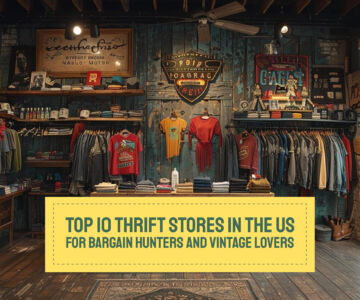
Thrift stores offer a treasure trove of unique finds, whether you’re hunting for budget-friendly fashion, vintage collectibles, or quirky home decor. If you love the thrill of the hunt, these top 10 thrift stores across the U.S. should be on your must-visit list. Each store offers a distinct selection and shopping experience, making them perfect for anyone with an eye for a bargain or a passion for the past.
Goodwill is a household name in the world of thrifting, with locations spread across the United States. What makes Goodwill stand out is its massive inventory, which includes everything from clothes and accessories to furniture and home goods. Every visit is an adventure, and with their frequent restocking, you never know what treasures you’ll uncover. Plus, shopping at Goodwill supports job training and employment services, making it a win-win for shoppers and the community alike.
Buffalo Exchange is a go-to for fashion enthusiasts looking for trendy, gently used clothing. With stores in major cities like New York, Los Angeles, and Chicago, this thrift chain offers a curated selection of second-hand fashion that’s both stylish and affordable. Buffalo Exchange also buys clothing directly from customers, meaning their inventory is constantly changing with the latest trends and timeless classics.
Located in New York City, Housing Works Thrift Shops are more than just a place to score a great deal. These stores are part of a non-profit organization that provides support for individuals affected by homelessness and HIV/AIDS. Each location offers a high-quality selection of clothing, furniture, books, and art, often sourced from donations by well-known New Yorkers. Shopping here not only satisfies your thrifting needs but also contributes to a meaningful cause.
Savers, also known as Value Village in some regions, is one of the largest thrift store chains in the U.S. Known for its well-organized aisles and wide range of items, Savers makes it easy to find what you’re looking for. Whether it’s vintage clothing, home decor, or even rare books, Savers has something for everyone. Additionally, their partnership with local non-profits means that your purchases help support community initiatives.
Crossroads Trading Co. offers a blend of thrift and consignment shopping, making it a favorite among fashion-forward thrifters. With stores in cities like San Francisco, Seattle, and Portland, Crossroads specializes in contemporary clothing and accessories from popular brands and designers. The store’s trade-in option also allows shoppers to bring in their gently used clothes and receive cash or store credit, creating a constantly refreshed inventory.
Out of the Closet is a thrift store chain that combines bargain shopping with a philanthropic mission. Proceeds from their stores benefit the AIDS Healthcare Foundation, making every purchase count. Located in cities like Los Angeles and Miami, Out of the Closet stores are known for their vibrant atmosphere and eclectic mix of clothing, accessories, and furniture. They also offer free HIV testing at many locations, emphasizing their commitment to community health.
The Salvation Army Family Stores are another staple in the thrifting community, with a presence in almost every state. Known for their affordable prices and extensive inventory, these stores are perfect for those looking to furnish a home on a budget or refresh their wardrobe with unique finds. The proceeds support the Salvation Army’s various social services, so shoppers can feel good about their purchases making a positive impact.
For vintage lovers in New York City, L Train Vintage is a must-visit. With multiple locations across Brooklyn and Manhattan, L Train Vintage specializes in affordable, high-quality vintage clothing. Their stores are packed with retro finds from every decade, making it easy to score unique, one-of-a-kind pieces. Whether you’re looking for a 90s windbreaker or a 70s boho dress, L Train Vintage has it all.
Community Thrift Store in San Francisco offers an eclectic mix of clothing, books, home goods, and more. What sets this store apart is its commitment to supporting local charities; shoppers can choose from a list of non-profits to receive the proceeds from their purchases. With its ever-changing inventory and focus on community, this store is a favorite among locals and visitors alike.
Wasteland is a haven for vintage fashion lovers in Los Angeles. Known for its curated selection of high-end and designer vintage clothing, this store attracts fashionistas from all over. While the prices can be higher than at other thrift stores, the quality and uniqueness of the items make it worth every penny. From rare band tees to designer jackets, Wasteland offers some of the best vintage fashion finds on the West Coast.
Thrift stores offer an unbeatable mix of affordability, sustainability, and style. Whether you’re a seasoned thrifter or new to the scene, these top 10 thrift stores in the U.S. promise a shopping experience that’s as rewarding as it is fun. Each store not only provides great deals and unique finds but also contributes to important causes, making your thrift shopping adventures meaningful in more ways than one. Happy thrifting!
FAQs
What are the top thrift stores in the U.S. for vintage clothing?
Which thrift stores offer the best deals on home decor?
Are there any thrift stores that support charitable causes?
Where can I find thrift stores with designer or high-end fashion?
What are the best thrift stores in New York City?
Which thrift stores buy clothes from customers for cash or credit?
What thrift stores are recommended for furniture shopping?
Are there thrift stores that offer free services, like HIV testing?