September 10, 2025
 2222 Angel Number Meaning: What It Really Means for Your Life and Relationshipsby admin / March 11, 2026
Live Better, Live Smart
Have you ever found yourself gazing at the stars on a clear night, just wondering about the sheer scale of our solar system? Facts about the solar system have this way of mixing mind-bending space facts with planet oddities and that unfathomable age. Let us walk you through 10 fresh ones that always make me stop and think.
The origin of our solar system dates back to 4.6 billion years ago in a nebula that was exploded by a supernova. The dying star’s blasting through helium and heavy elements into a gas cloud that gravity condensed. The sun formed at the center, while dust around the edges clumped into pebbles, rocks, planetesimals and eventually all the planets—including the earth. No ancient starburst, no us.
The sun claims 99.8% of all the mass out there. Planets, moons, asteroids and comets get the remaining 0.2%. It dictates the orbits but really drives home how lopsided this cosmic family is.
Mercury’s orbit varies 7% year to year, closest then farthest from the sun. Solar gravity makes it precess or wobble uniquely fast. Combine slow spin with zippy orbit and one day equals 59 earth days.
Uranus tips 98 degrees, rolling on its side as it orbits. Poles face constant sun or dark for 42 years each in its 84-year loop. Methane ice paints it blue-green. Deep down, diamond rain could fall.
Our Moon edges from earth are 1.5 inches yearly. A mars-sized smashup eons ago birthed it from flung debris. Tides gradually slowed and stretched its orbit. Now it shows us just one face always.
Jupiter’s field spans 600,000 miles sunward, 37 million the other way. Stronger than earth’s by 20,000 times, it fries moons with particles. Io’s volcanoes owe some fury to that radiation bath.
Saturn tips the scales at 0.69 g/cm³ density. It would bob in a bathtub. Hydrogen-helium mix plus rapid equator spin make it bulge. Days zip by in 10.5 hours.
Oort Cloud encases everything in a 2 light-year sphere of icy comets. Trillions strong, it launches long-period showstoppers like Hale-Bopp. The true boundary lies 100,000 times earth’s distance.
Venus shed its water to solar wind over time. Left with scorching dryness. Lightning flashes on. Volcanoes refresh the surface every few hundred million years.
‘Oumuamua in 2017 and Borisov in 2019 hailed from other systems. Hyperbolic tracks proved they passed through. Borisov tailed like a comet. ‘Oumuamua shaped like a cigar.
| Feature | Inner Planets | Outer Planets |
| Makeup | Rock, metal cores | Gas, liquid ice |
| Distance | Close to sun | Farther reaches |
| Spin | Varied speeds | Mostly upright |
| Atmospheres | Thin or none | Thick and heavy |
Also check: The Secrets of Space: Fascinating and Unknown Facts
Ours looks rugged beside tidy exoplanets. Scattered chunks, tipped giants, comet guests mean it is still shaking out. Sun’s pull balances life-friendly order with raw exploration bait.
A supernova nebula collapsed 4.6 billion years ago, forming a rotating disk.
It captured 99.8% of the material early on, leaving crumbs for the planets.
It rolls sideways at a 98-degree tilt with long sunlit poles. Diamond showers may occur.
Comet reservoir two light-years out. Source of long-period comets.
‘Oumuamua and Borisov visited from other stars. Proof of interstellar objects.
These facts about the solar system pull you right in. Supernova sparks to wandering visitors tell billions of years of drama. Probes and scopes keep the discoveries coming. Our space neighborhood brims with the unexpected.









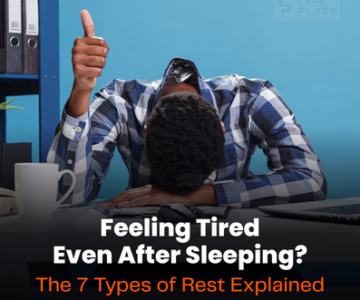
Ever wake up after a full night’s sleep, yet drag through the day with nagging fatigue? Sleep alone often falls short. True energy comes from addressing all seven types of rest, a concept from physician Dr. Saundra Dalton-Smith that tackles why exhaustion lingers despite shut-eye.
Busy schedules drain more than just the body. Modern life bombards minds, emotions and senses, leaving people depleted in hidden ways.
This guide breaks down the seven types of rest, practical ways to get each one and why they beat simple breaks. Readers gain actionable steps to recharge fully, backed by health experts. Time to rethink rest and reclaim vitality.
Plenty hit the pillow for eight hours but still feel wiped out. Science points to rest deficits beyond physical recovery. The brain processes nonstop input from screens, talks and stress, creating “invisible” fatigue.
Statistics show 77 percent of workers battle burnout, often from unbalanced rest. A break might pause work, but rest restores deeply. Breaks refresh temporarily whereas rest rebuilds capacity across layers like emotions or creativity. Understanding the seven types of rest reveals the gap and offers fixes.
Each type targets a specific drain. Balance them daily for peak energy.
Incorporate all seven types without big overhauls. Start small.
Track via apps or journals. Aim for variety; one type boosts others. Studies confirm balanced rest cuts fatigue 30 percent faster than sleep alone.
| Type of Rest | Quick Practice | Instant Benefit |
| Physical | 10-min nap | Eases body tension |
| Mental | List brain dumps | Clears mental fog |
| Emotional | Vent to a trusted pal | Lifts mood burden |
| Sensory | Closes your eyes | Reduces overload |
| Creative | Nature gaze | Sparks fresh ideas |
| Social | Solo evening | Recharges bonds |
| Spiritual | Gratitude note | Builds purpose |
Breaks pause activity, like coffee chats or scrolls. Rest actively replenishes depleted resources. A break might scroll feeds (adding sensory drain), while rest dims lights for true calm.
Breaks refresh surface-level; rest rebuilds foundations.
Example: lunch break eats amid noise (break), but mindful solo meal quiets senses (rest). Prioritize rest for lasting pep.
Professionals transformed energy.
These shifts prove rest compounds: better sleep follows mental ease.
Also Check: The Connection Between Sleep and Mental Health
Short bursts: stretches, breathers, or quiet moments fit anywhere.
Sleep misses non-physical drains like emotional or sensory overload.
Breaks pause tasks; rest rebuilds specific energy types deeply.
All seven; deficits in one ripple across others.
Embrace all 7 types of rest each day to tap into energy that sleep alone can’t give you. Balance them out, and you’ll see fatigue melt away as your vitality kicks in. Your best self is waiting.

Esports games create an immersive experience which lets players experience virtual combat as authentic as actual stadium matches. The events attract large audiences while transforming gamers into entertainment stars through their competitive matches which generate billions in revenue and reach viewers worldwide.
The top 10 results require understanding basic concepts which need to be learned first.
Competitive gamers demonstrate their abilities through organized matches which showcase various video game genres from action-packed shooting games to complex strategic battle games. The events stream live on Twitch which attracts millions of viewers who all cheer for the competition.
Recent updates paint a booming picture. In 2025, revenue hit USD 4.5 billion, with mobile titles surging 27.6% thanks to easy access on phones. This growth hooks new fans daily, blending tech thrills with real competition.
Popular esports games keep the energy high across genres. Counter-Strike 2 leads shooters with nearly 8,000 teams and 1.38 million peak viewers per big match.
These titles thrive on skill and stories, like recent upsets at Intel Extreme Masters Kraków 2026 that had chat exploding.
The most important esports game can be identified through various metrics.
The Esports World Cup 2026 which took place in Riyadh collected $75 million through 24 games because no single game could dominate the event.
Here comes the highlights that will surprise even casual gamers. These facts about esports spotlight why it’s exploding.
North America leads revenue at $1.076 billion, India closes at $107.8 million. FaZe Clan’s Six Invitational 2026 win over Team Spirit 3-1 just added epic lore.
Many people don’t consider esports as a real sport because professional players train hard, study strategies, travel for tournaments and compete under intense pressure, just like traditional athletes.
The International Olympic Committee has explored adding esports and countries like South Korea and China officially recognize esports players as athletes.
Though it relies more on mental skill than physical strength, esports demands focus, fast reflexes and discipline making it far more than just a hobby.
Opportunities are expanding rapidly:
AI already helps 30% of teams predict plays. Esports World Cup 2026’s Nations Cup debuts country pride. At 20.9% CAGR, expect fuller stadiums and wilder stories.
Mobile Legends: Bang Bang leads at 5.68 million peaks, followed by Counter-Strike 2, League of Legends, Valorant and Honor of Kings.
The answer is yes because esports requires intense training, strategic thinking, quick reflexes and high levels of mental focus. Organisations such as the International Olympic Committee have recognised the growing importance and competitive nature of esports.
Esports World Cup 2026 in Riyadh offers a $75 million prize pool which exceeds the $40 million prize pool of The International.
The average salary reaches $138000 per year while top players who have sponsorships make more than $300000.
The market will reach $30.7 billion by 2036 because of mobile and virtual reality technology.
Esports games represent a technological battle between gaming skills and professional athletic competition which displays equal intensity to their sports competition. The arena brings permanent excitement for both players and spectators because of its expanding audience base and upcoming technological advancements.
You can join the experience by selecting a game title which demonstrates the reason behind the yearly billions of viewers who watch this content.