September 10, 2025
 Personal Data Wallets: The Digital Asset Everyone Will Have by 2030by admin / September 2, 2025
Live Better, Live Smart
The app environment has expanded beyond the confines of a digital network. It has evolved into an international marketplace where people consume, bank, communicate and organize their lives. It is in this fast-developing digital economy that micro-insurance for repairs is being achieved as an attractive value proposition both for consumers and companies.
Whether it’s a broken mobile screen, faulty home appliance or a car breakdown. Nowadays consumers crave for speedy, low-cost coverage that won’t affect their hectic lifestyles. That’s why increasingly more consumers are gravitating towards apps providing micro-insurance at their fingertips.
By integrating these choices into online platforms, companies aren’t just insuring customers they’re fostering trust, retaining users and opening up new revenue streams.
Micro-insurance is low-cost, short-duration and very accessible insurance solutions geared towards particular needs. In the repair context, it involves providing customers with small, adjustable insurance policies for problems such as:
In contrast to conventional insurance, which usually involves cumbersome forms and high fees, micro-insurance for repair is low-profile, affordable and typically triggered wholesale ideal for app-based environments.
The move towards embedded micro-insurance is not a fad, it’s consumer behavior. A PwC study pointed out that digital-native consumers increasingly look for protection choices at the point of checkout. Rather than purchasing an insurance policy separately, they prefer a smooth, one-click alternative within the same interface.
For companies, this integration addresses two important issues:
Example: Imagine booking an appliance repair service through an app and being offered instant micro-insurance coverage that protects against the same issue recurring within 90 days. That level of convenience is not just customer service, it’s smart business.
Micro-insurance policies are made to be affordable. Users can pay a few dollars per month for the most frequent repair requirements. This affordability breaks down barriers and brings low and middle income customers into the fold, who may have otherwise shunned traditional policies.
Apps that offer micro-insurance for repairs are viewed as more trustworthy since they cover users after the first transaction. This trust enhances usage and repeat behavior.
Companies based on repairs have warranty claims and customer dissatisfaction risks. By collaborating with the insurers and adding the micro-coverage, they can minimize the risk while still keeping the customers satisfied.
Insurance integrations provide apps with valuable information regarding repair trends, failure points and user behavior allowing companies to more precisely customize services and product lines.
The most natural place to provide micro-insurance for repairs is at the checkout. For instance, a smartphone retail app can provide a screen protection program just before the customer makes their purchase.
New-age insurers offer plug-and-play APIs, which enable apps to integrate insurance coverage into their ecosystems seamlessly. This precludes cumbersome underwriting procedures and accelerates go-to-market time.
Micro-insurance can also be linked to loyalty schemes giving frequent users free or reduced-cost repair cover. This gamification builds customer loyalty.
Although the prospect of micro-insurance for repairs is obvious, companies also need to think through the challenges:
In order to thrive, apps need to build trust, transparency and simplicity of use when presenting micro-insurance options.
The outlook is good. Allied Market Research expects the global market for micro-insurance to exceed $111 billion by 2030, led by digital platforms. The following trends will help shape the future of micro-insurance in the app ecosystem:
With these advancements, micro-insurance for repairs will be more integrated – evolving from ancillary services to a pillar of digital ecosystems.
The future of digital ecosystems promises convenience, trust and customer-centric solutions. Micro-insurance for repairs fits perfectly within that future, providing cheap, instant coverage directly where users want it most, within their favourite apps.
For businesses, this embedding means improved loyalty, reduced risk and stronger revenue models. For users, this translates into instant peace of mind with a single tap.
In an age of digital proliferation and with every little interaction at stake, building micro-insurance for repairs into the app may be the best thing apps can do to create sustainable growth.










How many videos do you view each day on social media? There is no exact number of calculations, right? Yes, because video content dominates over other formats of content on social media platforms. Small to large businesses and other top global companies all want to influence their content for audience attention. Right now, video content is becoming one of the best marketing tools in social media content marketing. A whopping 80% of businesses now target Generation Z rather than millennials. However, they primarily consume most of their information through social media. Here’s how to maximize the impact of video content on social media.
Video content helps to grab the audience easily in the first few minutes. This is exceedingly easy to absorb, unlike lengthy, boring texts. According to 99firms, 500 million users consume 100 million hours of video each day on YouTube and Facebook. Here are a few benefits of video content:
Now you’ll get the point about how video content plays a vital role in social media. Let’s see how to maximize the video content on social media.
SEO is not only for blogs. Besides, you can do this with videos too. For that, just follow the simple video SEO. That is optimizing the video content to be indexed and rank first in the search engine results for relevant keyword searches. There are many optimization tactics here to help rank the video higher. People used to expand their knowledge by watching videos online. Here are a few keys to video SEO:
Video marketing is one of the best content marketing strategies, and this provides a golden opportunity for businesses to share a product or service with a target audience. It retains engagement on digital and provides the positive effects of social media channels, and this allows you to reach them with a new medium. Videos provide a major impact on how brands reach their consumers. It increases the time visitors spend on the page. More than 80% of video marketers say video generates more leads.
Video marketing can increase ROI (return on investment) in several ways. Videos tend to be more engaging and interesting than text or images alone. This increased social media video engagement can lead to a longer time on site, more shares, and ultimately more conversions. Videos are more likely to rank highly in search engines, which can lead to increased visibility and traffic to your website. Videos can be highly persuasive and help build trust with potential customers. Videos can help to build brand awareness and recognition, which can lead to increased customer loyalty and repeat business.
The significant benefits of video advertising are widely shareable. To maximize the content, present it in different ways, such as by refreshing your content with minor updates. Through this, your followers and new visitors experience eye-catching visualization.
YouTube is not the only platform to upload video content. Plenty of other sites will show your videos to their visitors. Especially, Vimeo, Dailymotion, Twitch, Vivo, Flickr, and more Videos can be shared on social media and other platforms, increasing their reach and potentially leading to more leads and sales. Therefore, utilize those platforms to upload videos and build your awesome social media impact.
The impact of video marketing can be an effective way to increase ROI, user engagement, SEO, conversion rates, and brand awareness, and it helps to reach the target audience. So you can ensure your video has enough fuel to inflame social media platforms.
You have to understand your audience and set the campaign’s goal. Always stay on brand and nail down your message across your videos. Optimize the video budget. Through these steps, your video content marketing will run effectively.
By having this social media presence, you can increase your brand’s recognition. And it significantly increases your ROI, too.
Video marketing helps your customer understand your product and services. And it assists them in making a buying decision. Through this, it will increase the return.
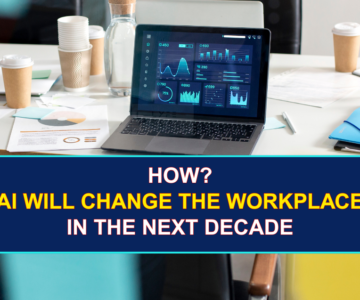
The current workplace changes brought by artificial intelligence bring both excitement and an unavoidable transformation according to these workplace alterations which show that intelligent machines will do standard tasks while humans will dedicate their efforts to creative work, strategic development and interpersonal relationships during the next decade.
Your AI assistant already completed its task of sorting through your emails while identifying essential items and creating a brief overview of customer feedback which arrived overnight. You spend your first minutes creating and developing your ideas instead of wasting time on unimportant tasks. The system uses scheduling and reporting functions to decrease repetitive tasks by 30 to 40 percent. The team achieves better results with reduced effort because meetings provide immediate translations and intelligent summaries which help all participants stay on track.
Management structures simplify as AI takes on tracking metrics and routine check-ins. In boardrooms, hybrid groups of people and digital agents review options quickly: “This plan grows revenue but adds stress; here is a balanced alternative.” Overall, jobs change more than they disappear, with millions of new opportunities in strategy and oversight balancing shifts elsewhere.
Change brings risks like biased outputs or privacy worries. Some fear job loss, but success comes from training programs that teach everyone to work with AI. Companies that set clear rules, test thoroughly and prioritize fairness navigate this best, turning concerns into strengths.
| Field | Main Changes | Growing Roles |
| Manufacturing | Early warnings for equipment | Workflow designers |
| Finance | Faster audits and fraud checks | Risk and ethics specialists |
| Healthcare | Quicker insights from patient data | Patient experience leads |
| Retail | Smarter stock and service | Customer insight planners |
| Marketing | Data-backed ideas for campaigns | Strategy and creative directors |
Fields like education and renewables benefit most from this blend of tech and human insight.
Basic tasks fade, but skills like understanding AI basics, thinking ethically and adjusting quickly rise in value. Most technology jobs now need training in guiding these tools effectively. Lifelong learning through short courses and practice becomes standard, helping everyone stay relevant.
Begin with one team or process to test AI, track clear results like time saved and expand from there. Create systems that connect securely and encourage open use. Build a mindset where trying new ideas leads to improvement, even if some do not work at first.
AI workplace transformation promises more fulfilling workdays, shorter hours for focused tasks and growth without exhaustion. It highlights our unique strengths: innovation, empathy and forward thinking.
AI manages daily chores so people handle higher-level work, often increasing output significantly.
Numbers show more jobs created than lost, with many adapting to include AI collaboration.
Manufacturing plants have significantly reduced downtime, while HR teams have accelerated hiring processes—demonstrating measurable gains from AI adoption.
A strong understanding of AI basics, good judgment in decision-making and the ability to adapt to evolving roles.
Everyday use grows fast this year, full integration over the decade.
AI workplace transformation opens a more efficient, human-centered future for work. Teams and leaders who learn alongside it, address risks openly and experiment boldly will lead the way.
How will you make this part of your workday?