September 10, 2025
 Top 5 Countries with the Most Unicorn Startupsby admin / February 19, 2026
Live Better, Live Smart
The working age population serves as the primary economic index which economists, government officials and business executives monitor during 2026. The data point functions as more than a basic measurement determining economic growth rates, pension system stability and the degree of stress experienced by healthcare systems and employment markets.
The guide provides an explanation of how to determine the working age population through its formula and list of countries with the largest working age groups.
The working age population refers to the number of people in a country who fall within a defined “working age” range which usually spans from 15 to 64 years old while some countries define working age between 18 and 64 years or 15 and 65 years.
The following group of people belongs in this category:
This consists of individuals who possess the ability to work but choose not to work at the present time. The core demographic indicator assesses labor force capacity while calculating dependency ratios and forecasting economic growth over extended periods.
There are two main ways to be calculated, depending on the data you have.
If you have full population‑by‑age data (for example from a census or national statistics office), the working age population formula is straightforward:
Working age population = Population aged 15–64
National agencies simply sum everyone in that age band from their population registers or surveys. This is the cleanest and most accurate method.
If you know the labor force and the labor force participation rate (LFPR), you can estimate the working age population with this formula:
Working age population = Labor force / Labor force participation rate
Here:
When people inquire about the country with the greatest working-age population they actually seek information about two things: population numbers and total population proportions.
Countries with the Largest Working Age Populations
In 2026, the countries with the biggest working age populations are generally those with large total populations and relatively young age structures:
India possesses one of the largest working age populations in the world because it has hundreds of millions of people who belong to the 15 to 64 age group. The country stands to gain from its demographic dividend because its health, education and job market development reach acceptable standards.
China has maintained a large working age population because of its increasing elderly population although its total working age population has decreased.
Some smaller or poorer countries have a high proportion of working age population relative to total population. The group includes many Sub-Saharan African nations and South Asian nations because they can achieve faster development through better employment opportunities, improved infrastructure and healthcare systems.
This demographic group is only as strong as its health. Poor health can turn a large labor‑force potential into underperformance.
Key health factors that impact this workforce segment.
Countries that invest in preventive care, workplace wellness programs and universal health coverage experience increased labor force participation and improved economic outcomes among their working age citizens.
The working age population size together with its health condition creates multiple important economic outcomes which include
GDP Growth and Productivity
A large, healthy labor-age population can boost GDP growth if enough jobs, skills and capital are available. The economy experiences higher output together with increased innovation and additional tax revenue when more workers enter the workforce.
The educational and training systems fail to develop skills at the necessary level which creates labor market problems because the working age population exceeds available job opportunities.
Dependency Ratios
The age dependency ratio compares the number of dependents (children and elderly) to the working age population.
Labor‑Force Participation and Unemployment
Even with a large labor-force base, high unemployment or low participation can limit economic gains.
For example:
The working age population of 2026 holds vital significance because it shows how people will rise from the earth.
The working age population is the number of people in a country who fall within a defined “working age” range (usually 15–64), regardless of whether they are currently employed or not.
You can either:
Sum everyone in the 15–64 age bracket from population data, or
Use the formula:
Working age population = Labor force / Labor force participation rate
The basic formula is:
Working age population = Population aged 15–64
When using labor‑force data, the formula becomes:
Working age population = Labor force / Labor force participation rate
The working-age population of India, China, The United States, Indonesia, Pakistan, Nigeria and Bangladesh represents one of the largest groups in the world. Many countries in Sub-Saharan Africa and South Asia show high working-age population percentages relative to their complete population numbers.
This core demographic group is more than a numerical entry in a spreadsheet. It serves as a vital tool for understanding how economies experience growth and development through different stages of their lifecycle. The countries which choose to invest their resources in health and education along with inclusive labor market development will achieve the most effective conversion of their working age population into economic power by 2026.
Research on 2026 demographic trends between countries requires to study both the population size and the health, skills and participation levels of the population. The two factors of whether a large working age population creates an opportunity or a difficulty for the workforce determine the outcome.









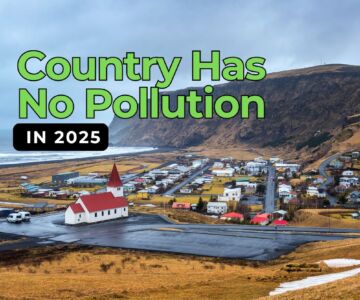
In an age where climate change, industrialization, and urban development continue to impact the environment, the question “which country has no pollution” has become more relevant than ever. While achieving absolute zero pollution may be nearly impossible, there are countries that have set high benchmarks for environmental sustainability and cleanliness.
In this article, we explore the country that comes closest to having no pollution, and what makes it a global leader in environmental health.
Before diving into which country has no pollution, it’s important to understand what we mean by pollution. Pollution generally refers to the presence of harmful or toxic substances in the air, water, or soil that affect human health and natural ecosystems. It includes:
Air pollution (carbon emissions, smog, particulate matter)
Water pollution (chemical waste, plastic, sewage)
Soil pollution (pesticides, industrial waste)
Noise and light pollution
A country with no pollution would have extremely low or negligible levels of all these pollutants, maintaining excellent environmental health for both people and wildlife.
According to the latest Environmental Performance Index (EPI) reports and World Health Organization (WHO) data, Iceland consistently ranks among the cleanest countries in the world. While no country has zero pollution, Iceland comes remarkably close.
Geothermal Energy Usage
Iceland uses geothermal energy and hydroelectricity for nearly all of its power needs. These renewable sources produce minimal emissions, reducing air pollution significantly.
Low Population Density
With a population of around 400,000 people spread over a vast area, the human impact on nature is low. Fewer people mean fewer vehicles, less industry, and reduced waste output.
Strict Environmental Regulations
Iceland’s government enforces strict policies on waste management, emissions, and water cleanliness. Public awareness about sustainability is also high.
Pristine Natural Resources
The country’s glaciers, rivers, and air remain largely untouched by industrial development. Its water is considered some of the purest in the world.
If you’re interested in other countries that come close to being pollution-free, here’s a list based on environmental performance, air quality, and sustainability practices:
| Rank | Country | Notable Feature |
|---|---|---|
| 1 | Iceland | Powered by 100% renewable energy |
| 2 | Finland | Clean lakes and forests, eco-friendly cities |
| 3 | New Zealand | Low population, strict emission controls |
| 4 | Sweden | Green innovation and urban planning |
| 5 | Norway | Electric vehicle usage and clean energy |
Each of these countries ranks high in environmental cleanliness, with Iceland often referred to as the country with no pollution due to its near-perfect environmental score.
When people ask which country has no pollution, they often mean clean air. Iceland’s air quality index regularly falls below 10 AQI (Air Quality Index), which is considered “excellent” by international standards.
In comparison, cities in heavily industrialized nations may see AQI levels above 100 or even 200, which are harmful to health.
Iceland’s water is not just safe to drink—it’s often bottled and exported. The soil remains uncontaminated thanks to minimal agricultural pesticide use and absence of heavy industry. These factors contribute to why many believe Iceland is the country that has no pollution in practical terms.
Green Infrastructure:
Homes and buildings are designed to conserve energy. Cities have abundant green spaces, which help filter pollutants.
Public Transport and EVs:
While public transport is common, a significant percentage of vehicles are electric or hybrid, especially in Reykjavik.
Eco-tourism:
Tourism, a major part of Iceland’s economy, is managed sustainably. Tourists are encouraged to follow eco-friendly guidelines.
Waste Management:
Recycling is widespread. Landfills are minimal, and composting is common in households and businesses.
Scientifically speaking, it is nearly impossible for a country to have absolutely no pollution. Human activity—no matter how minimal—creates some degree of environmental impact. But countries like Iceland demonstrate that it’s possible to reduce pollution to negligible levels, setting an example for the rest of the world.
Whether you’re a nature lover, a health-conscious traveler, or an environmental researcher, visiting a country with no pollution can offer:
Clean, fresh air that benefits respiratory health
Safe drinking water straight from natural sources
Incredible scenic beauty and unspoiled landscapes
A chance to learn sustainable living practices
If you’re searching for a peaceful, green destination, Iceland and other low-pollution countries are worth adding to your travel list.
While no place on Earth is 100% pollution-free, Iceland comes impressively close. Its reliance on renewable energy, clean industries, and deep-rooted environmental ethics make it the best answer to the question: which country has no pollution?
If the rest of the world adopts similar practices, we might one day live in a world where pollution is a thing of the past. Until then, countries like Iceland continue to inspire global action through their commitment to a cleaner, healthier planet.
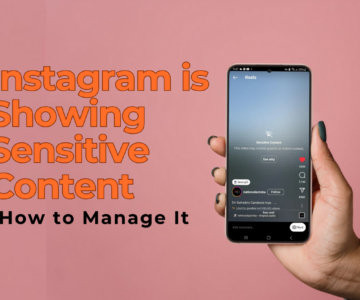
Instagram is one of the most popular social media platforms, with millions of users sharing photos and videos daily. However, some users have noticed that Instagram is showing sensitive content in their feeds, Explore page, or Reels. If you’re wondering why this is happening and how to manage it, you’re in the right place. In this article, we’ll explore the reasons behind Instagram showing sensitive content and guide you on adjusting your settings for a better experience.
Sensitive content on Instagram refers to posts that may contain explicit, violent, or controversial material. While Instagram does not allow outright offensive or illegal content, it does permit certain types of posts that some users may find disturbing. These include:
Instagram categorizes such posts as “sensitive” and applies content filters to help users manage their exposure.
There are several reasons why Instagram might be showing you sensitive content:
By default, Instagram applies a standard filter to restrict some sensitive content. However, if you haven’t manually adjusted your settings, you might still see posts that Instagram considers borderline but not against its guidelines.
Instagram’s algorithm curates content based on your interactions. If you frequently like, comment on, or watch videos related to certain topics, the platform assumes you are interested in similar content—even if it falls under the sensitive category.
The Explore page is designed to show content tailored to your preferences. If you see sensitive content there, it may be because of your previous engagement with related posts or hashtags.
For users under 18, Instagram automatically applies stricter content restrictions. If your account is set as an adult profile, you may see more diverse content, including sensitive topics.
If you follow accounts that post sensitive material, Instagram may show you similar content from other sources as part of its recommendation system.
If you don’t want to see sensitive contents on Instagram, you can modify your settings. Here’s how:
Instagram offers a feature to filter sensitive contents in your feed and Explore page. To adjust this:
Selecting “Less” will reduce the amount of sensitive content Instagram shows you.
The Explore page is influenced by your activity. To reduce sensitive content:
If certain accounts frequently post sensitive material, you can:
If you come across content that you believe violates Instagram’s guidelines, you can report it:
For teenagers using Instagram, parents can set up parental controls to monitor and limit content exposure. This can be done through Instagram’s Family Center settings.
No, Instagram does not offer a complete block, but setting Sensitive Contents Control to “Less” significantly reduces exposure.
Content filtering is not perfect. The algorithm may still show some posts based on your interactions or due to new content classification updates.
Instagram does not officially use “shadowbanning” but does reduce visibility for posts that don’t align with its guidelines.
Switching to a private account does not affect what you see, but it controls who can interact with your posts.
Yes, Reels follow the same Sensitive Content Control settings. If you see unwanted content, mark it as “Not Interested.”
Instagram aims to balance free expression with user safety by providing sensitive contents controls. If you’re seeing more sensitive content than you’d like, adjusting your settings, managing your activity, and using reporting tools can help curate a better experience. By taking control of your preferences, you can ensure that your Instagram feed aligns with your comfort level.